The first few weeks back to school are filled with excitement, anticipation, a few nerves, and plenty of chaos—for both teachers and students! While it’s hard to say goodbye to carefree summer days spent playing with friends and sleeping in, there’s something comforting about returning to the familiar routines of the school day. Those first days can feel busy as everyone settles into new schedules, learns classroom expectations, and gets to know one another. That’s why I love using meaningful first week of school activities that help students ease into the new school year while building a strong sense of classroom community from day one.
Easy First Week of School Activities That Build Community
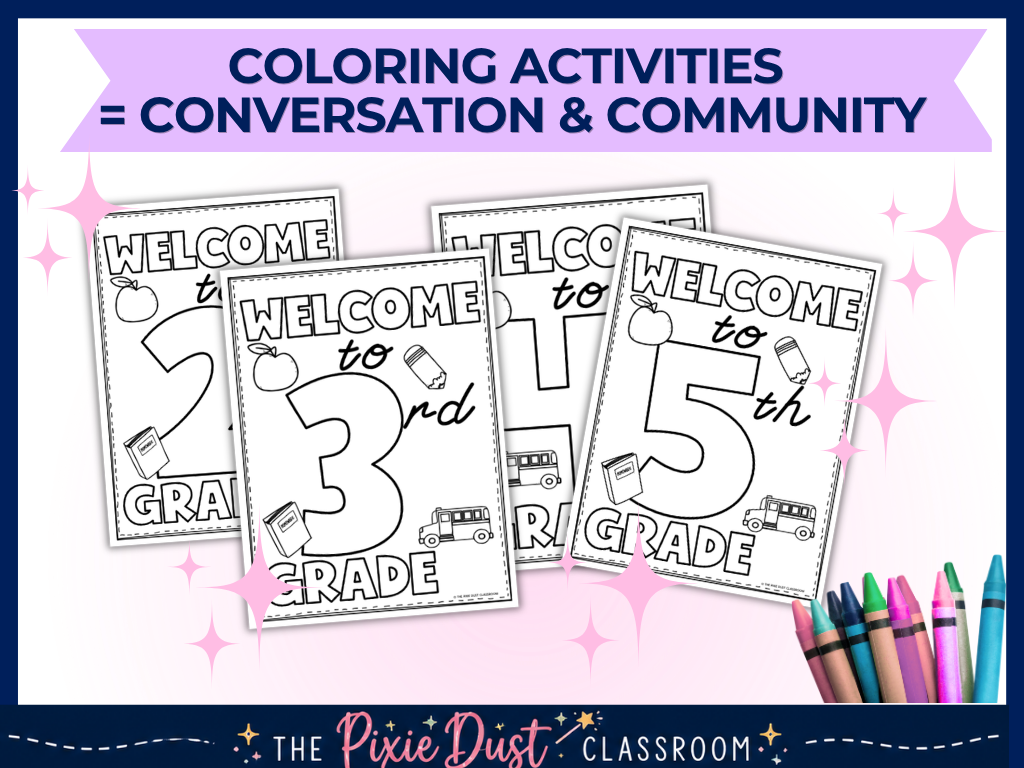
One of my favorite ways to make the first weeks of school welcoming, accessible, and engaging for every student is by using coloring activities. They provide a calm, low-pressure way for students to settle into their new classroom while giving everyone an opportunity to participate successfully. As students color together, natural conversations begin to unfold, helping classmates get to know one another and creating meaningful connections from the very first days of school. It’s a simple activity that sets a positive tone while quietly building a strong classroom community.
Classmate Interviews
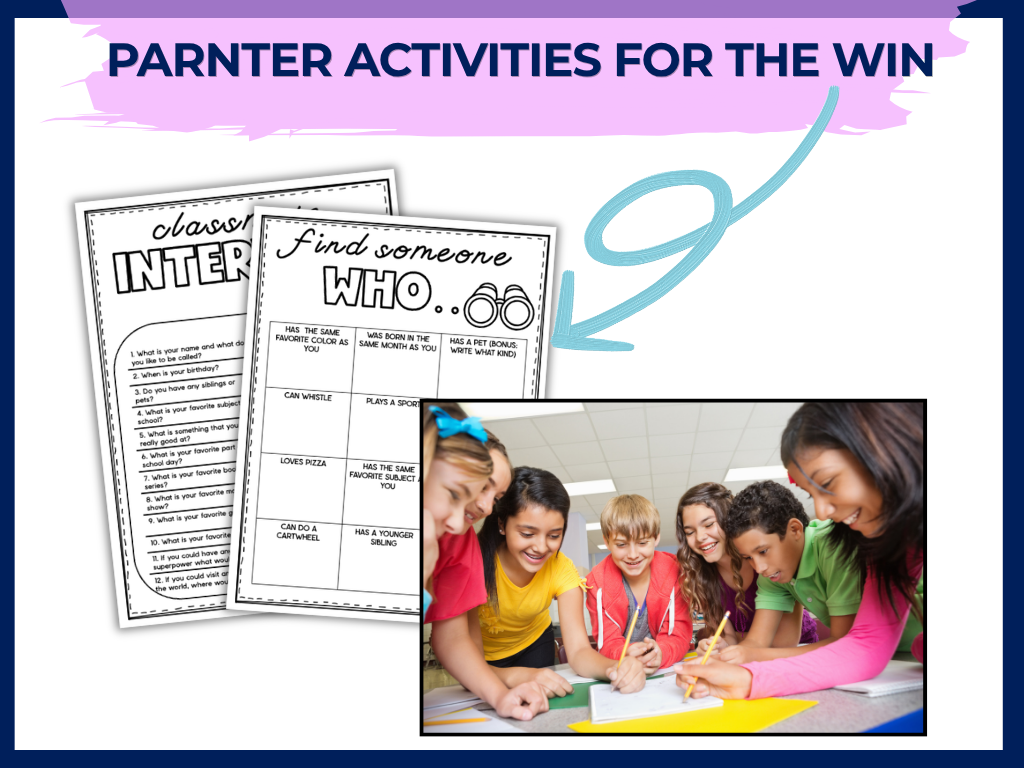
While many of your students may already know one another, a new school year brings a new classroom community. Even familiar classmates need opportunities to reconnect, build new friendships, and learn how to work together in a different environment. Intentionally helping students get to know one another allows them to discover shared interests, appreciate their differences, and develop empathy for their classmates. Those connections lay the foundation for a supportive classroom where students feel comfortable participating, collaborating, and taking academic risks throughout the year.
All About Me Activities
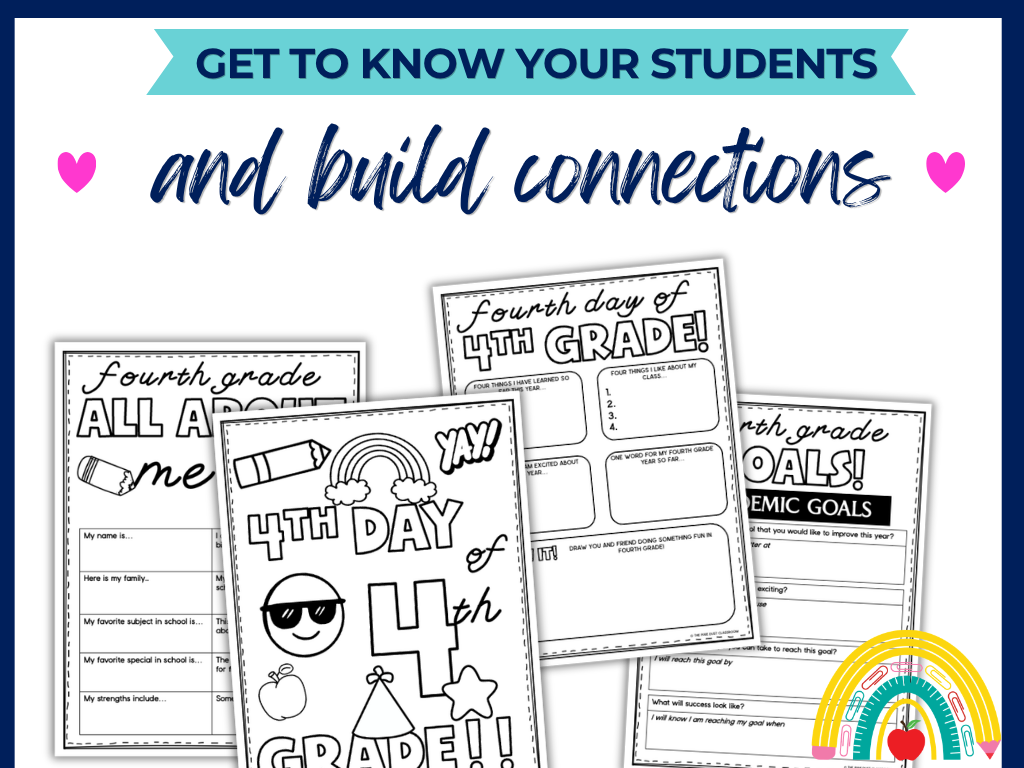
Giving students the opportunity to share more about themselves is one of my favorite ways to start the school year. I love learning about their interests so I can weave them into future lessons (think Minecraft-themed math problems or reading passages featuring their favorite animals!). I also take time to read each response carefully to learn how students see their own strengths, challenges, and learning preferences. This valuable insight helps me build stronger relationships with my students and create learning experiences that feel more personal and meaningful throughout the year.