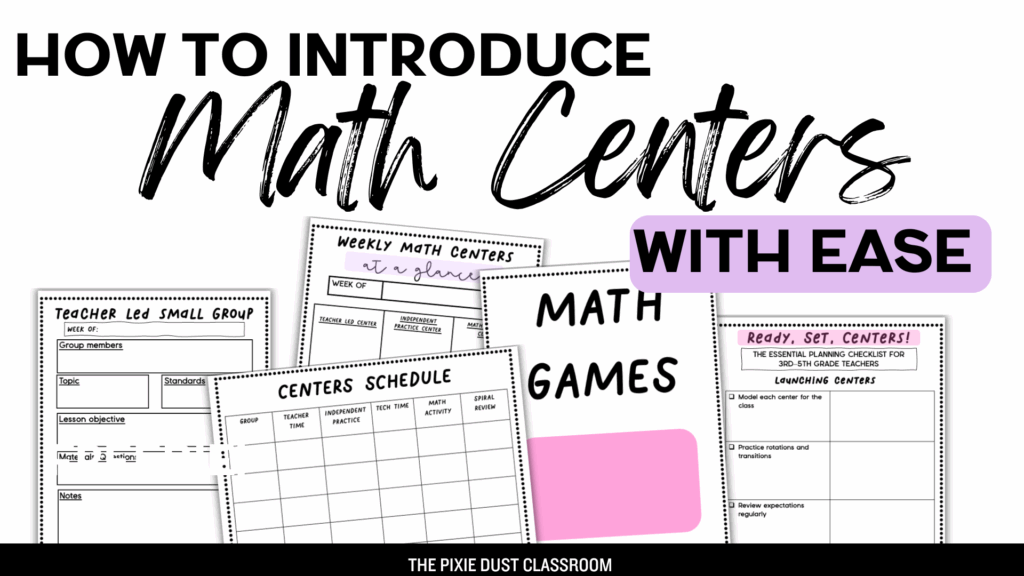
How to Introduce Math Centers in the Classroom
I still remember the moment I realized something had to change during math.
I was standing at the front of my classroom while three students needed reteaching, two were halfway through their assignment, and at least four were staring at the ceiling waiting for help. One had already finished everything and was poking around in her desk for something—anything—to do.
It was chaos… and not the fun kind.
I had heard about math centers in professional development sessions, seen the Pinterest boards, and watched teachers rave about how centers transformed their math block. But honestly? It all felt overwhelming. The rotating groups, the prep, the classroom management—it just seemed like a lot.
Still, I knew I couldn’t keep teaching math the same way.
So I started small. I tried a few simple centers, focused on flexible groups, and gave myself permission to figure it out as I went.
What I discovered was that math centers don’t have to be complicated to be effective. With a few key routines and the right mindset, they can make a huge difference—for both your teaching and your students’ learning.
In this post, I’m sharing the exact steps I took to make math centers simple, sustainable, and actually enjoyable. Whether you’re brand new or just need a fresh start, this guide will help you get started without the overwhelm.
Why Math Centers Are Worth It
I get it. It’s another thing to learn about, to try out, and will it even be worth it?
Those were my exact feelings time and time again as I considered starting math centers in my classroom. But – I can tell you as a former centers skeptic – it is totally worth it.
I am a teacher who craves calm. Each year I created classroom environments that fostered this and leaned heavily into classroom management techniques that were positive and reinforcing. I was so scared to try math centers and disrupt the calm. But you know what? It didn’t. In fact, it gave me way more freedom during my math block. Freedom to help the students who were struggling and also freedom to provide extension activities for students who had mastered concepts. Freedom to provide opportunities for all different learning styles to shine. Freedom to tailor my lessons for small groups and make meaningful progress toward student goals.
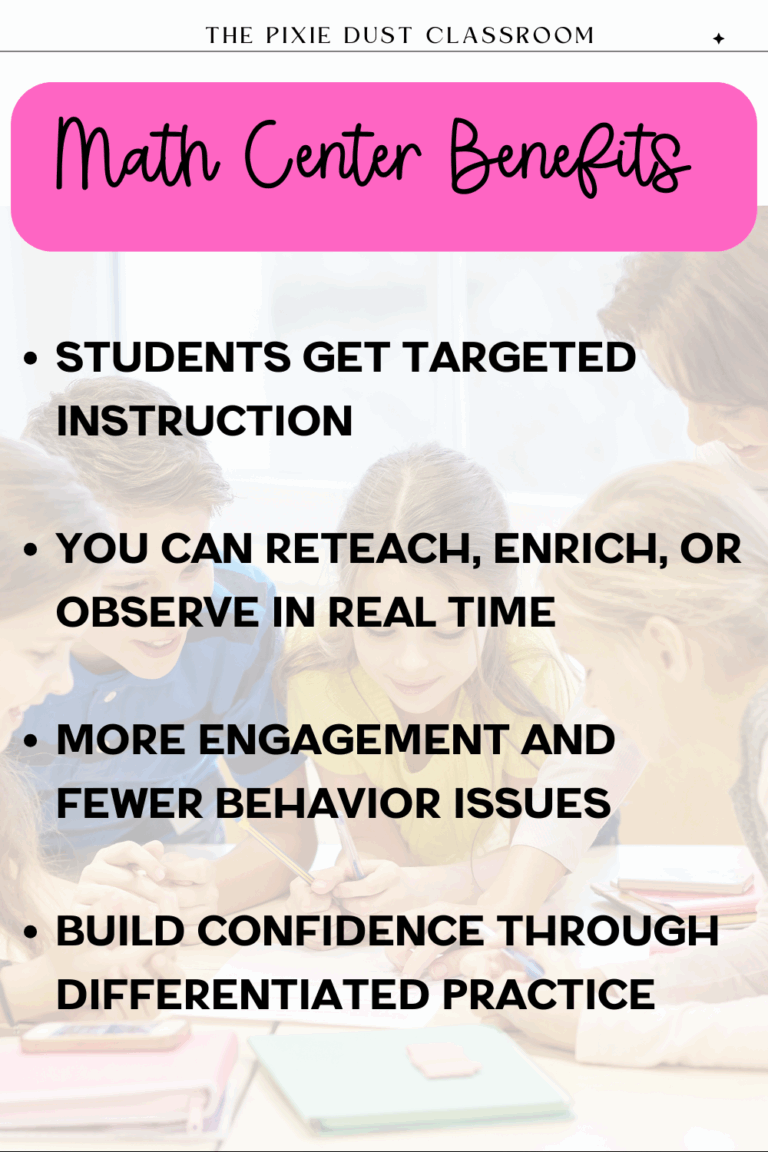
Small groups are not only a more efficient way to support all students, but they also allow for truly targeted instruction. Each small-group meeting serves a specific purpose, whether it’s reteaching, enriching, or helping students work toward mastery. This approach promotes greater engagement and builds confidence through thoughtful, differentiated practice that meets students where they are.
How to Group Students Without Overcomplicating It
One of the “hardest” parts of running math centers is grouping students. But really—it doesn’t have to be. There’s no secret formula, and groups don’t have to be perfect. They can (and should) be flexible and change over time.
One week, you might group students by skill level—which was often my go-to. Having students who were all “on the same page” really helped me target instruction and move them to the next level. But that wasn’t the only strategy I used. I also grouped by collaboration style, mixed ability levels, or even in ways that prevented potential classroom disruptions.
No matter how you choose to group, remember that these groups should evolve as students grow and new skills are introduced. Group formation is something to think about multiple times throughout the year.
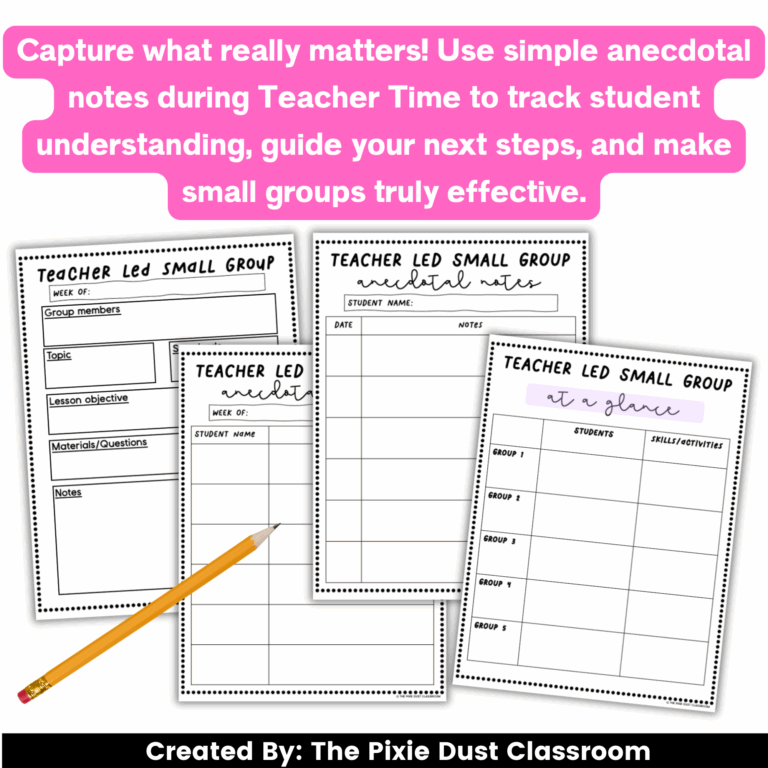
One tip: Use anecdotal notes. Let’s face it—we probably can’t remember what we had for dinner last night, let alone what Anna needed help with during centers! Taking quick notes will guide you as you form new groups.
I recommend keeping groups consistent for at least one full center rotation (typically a week), then adjusting as needed. I didn’t feel the need to change groups every single week—but there’s no right or wrong approach here. Do what works best for your students and your classroom!
5 Popular Math Centers to Use in Your Classroom
One of the best things about math centers is how flexible they are! You can choose the types of centers that work best for your students and mix them up throughout the year. Here are five of the most popular math centers to consider for your rotation:
Teacher-Led Small Group Center
This is where the real magic happens! Meet with a small group for targeted instruction, reteaching, enrichment, or intervention. It’s the perfect time to address students’ specific needs and move them toward mastery with intentional, focused practice.
Independent Practice Center
Give students a chance to reinforce skills on their own. This center can include worksheets, task cards, color-by-code activities, or any no-prep practice pages. It’s an easy way to review and strengthen understanding while you work with other groups.
Math Games Center
Engagement at its best! Math games help students build fluency and reasoning while having fun. Use board games, card games, dice games, or even simple partner games to make practice meaningful and collaborative.
Technology or Digital Center
Incorporate tablets, computers, or interactive whiteboards for practice with learning apps, Boom Cards, or online quizzes. Students love the instant feedback, and you can easily differentiate activities to meet different needs.
Problem-Solving or Application Center
Encourage students to think critically with real-world word problems, multi-step tasks, or projects. This center builds deeper understanding and supports math talk as students explain their reasoning and strategies.
These centers can be adapted for any classroom and any skill you’re teaching. When planning your rotations, think about what best meets your students’ needs—and remember, centers don’t have to be complicated to be effective!
Routines That Make Centers Run Smoothly
Math centers are most effective when students know exactly what to do. Taking time to teach and reinforce routines will help your centers run independently, so you can focus on small groups without constant interruptions. Here are a few essential tips for making your math center time smooth and successful:
Set Clear Expectations
Be explicit about what you expect for transitions, voice levels, help signals, and cleanup. Model exactly what each looks and sounds like, and have students practice until it becomes automatic. The clearer you are upfront, the fewer reminders you’ll need later.
Practice Routines Like Any Other Procedure
Just like lining up or turning in homework, math center routines need practice. Don’t be afraid to spend a few days (or even weeks) at the beginning of the year setting these expectations. It’s an investment that pays off all year long.
Use Accountability Tools
Recording sheets, simple checklists, or math reflection prompts keep students on task and give you insight into their thinking. These tools help hold students accountable for their work and make it easy to review progress.
Always Have Early Finisher Options Ready
Planning for early finishers keeps everyone engaged and minimizes off-task behavior. Have a set of meaningful, low-prep activities ready to go—like math games, fact fluency practice, challenge problems, or review task cards.
When you take time to teach and reinforce these routines, your math centers will practically run themselves—giving you the freedom to focus on small group instruction and truly meet your students’ needs.
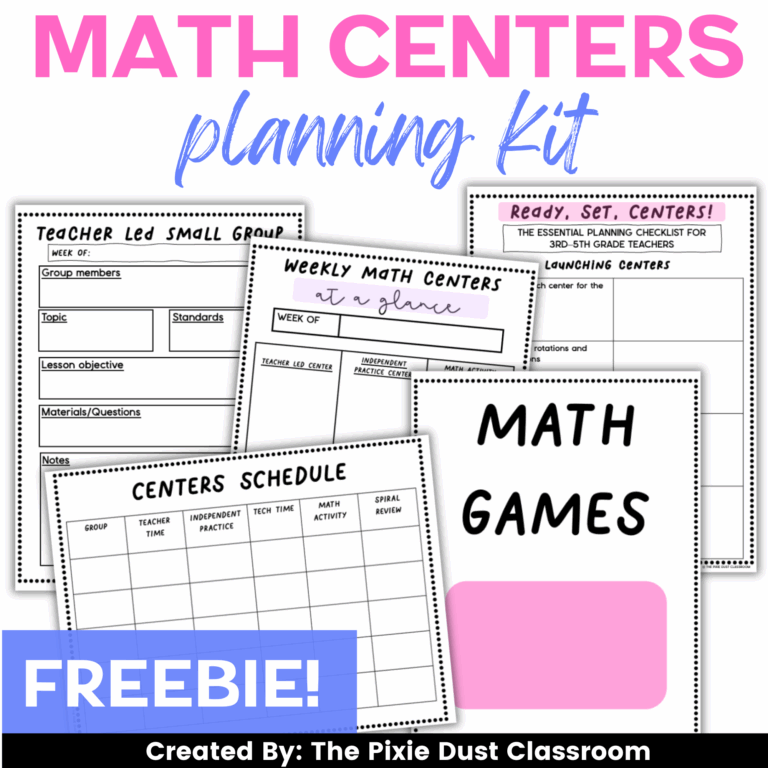
Math centers don’t have to be complicated—they just need to be intentional. With a clear plan, consistent routines, and engaging activities, you can transform your math block into a time when every student gets exactly what they need. Whether you’re brand new to centers or looking to refine your system, I hope these tips help you feel ready to jump in. Don’t forget to grab the free Math Centers Setup Checklist below to make planning even easier!