The first week back after summer break can be tricky! You want to get to know your students, build a positive classroom community, and help everyone transition into a new school year as smoothly as possible. At the same time, you need to get a sense of where your students are academically without overwhelming them with a stack of assessments.The good news? You can do both!
These 10 engaging first-week math activities will help you gauge your students' math skills while keeping the atmosphere light, fun, and low-pressure. They'll be solving problems, working together, and building confidence from day one—all while giving you valuable insight into what they already know and where they may need extra support.
Why the First Week of Math Matters
It's no secret that anxiety tends to run a little high during the first weeks of school. That's why those first few math lessons are so important—they help lay the foundation for the entire year. This is the perfect opportunity to build confidence, foster a positive math mindset, and establish classroom expectations.
From day one, I always remind my students that mistakes are not only okay—they're an important part of learning. In our classroom, the goal isn't to get every problem right the first time. Instead, we focus on trying our best, learning from our mistakes, asking questions, and persevering through challenges. Creating a safe environment where students feel comfortable taking risks helps build the confidence they need to grow as mathematicians all year long.
10 Fun Math Games That Build Excitement
1. Math BINGO
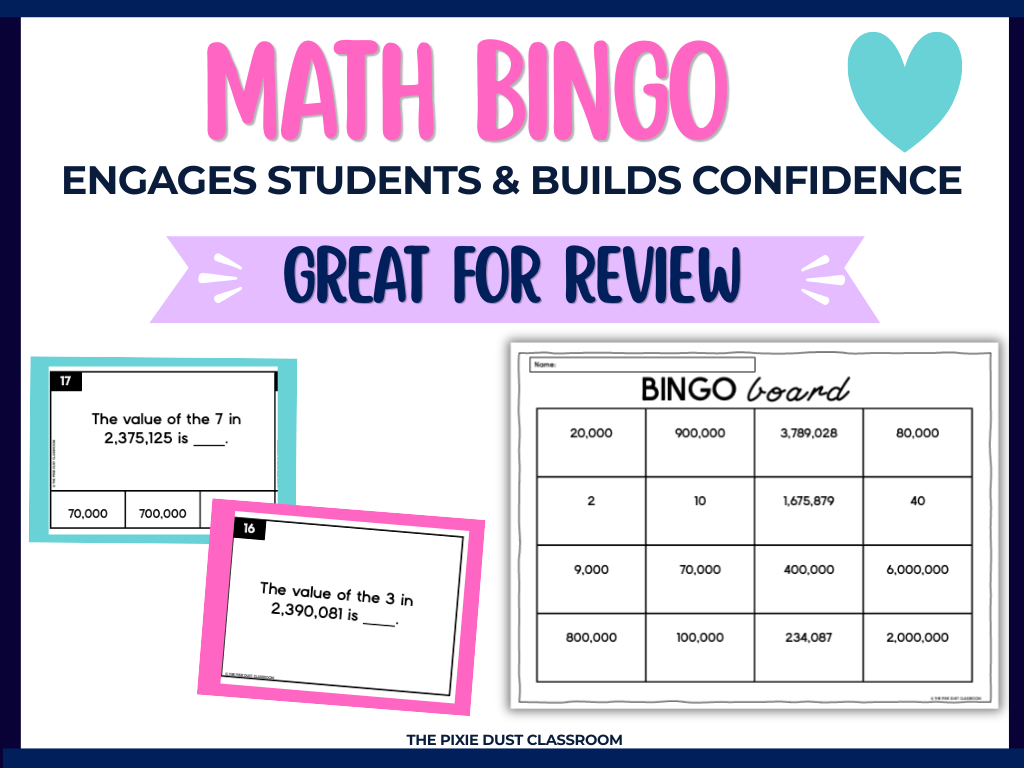
Who doesn't love a good game of BINGO? I challenge you to find any kid or adult who gets the coveted four in a row doesn't just get a huge thrill from shouting "BINGO"! Prize or not, the joy is real. Try capitalizing on that excitement and do math bingo during the first few weeks of school. Your students will love playing so much that they will forget that they are reviewing key math skills (maybe?)
2. Math Tic-Tac-Toe
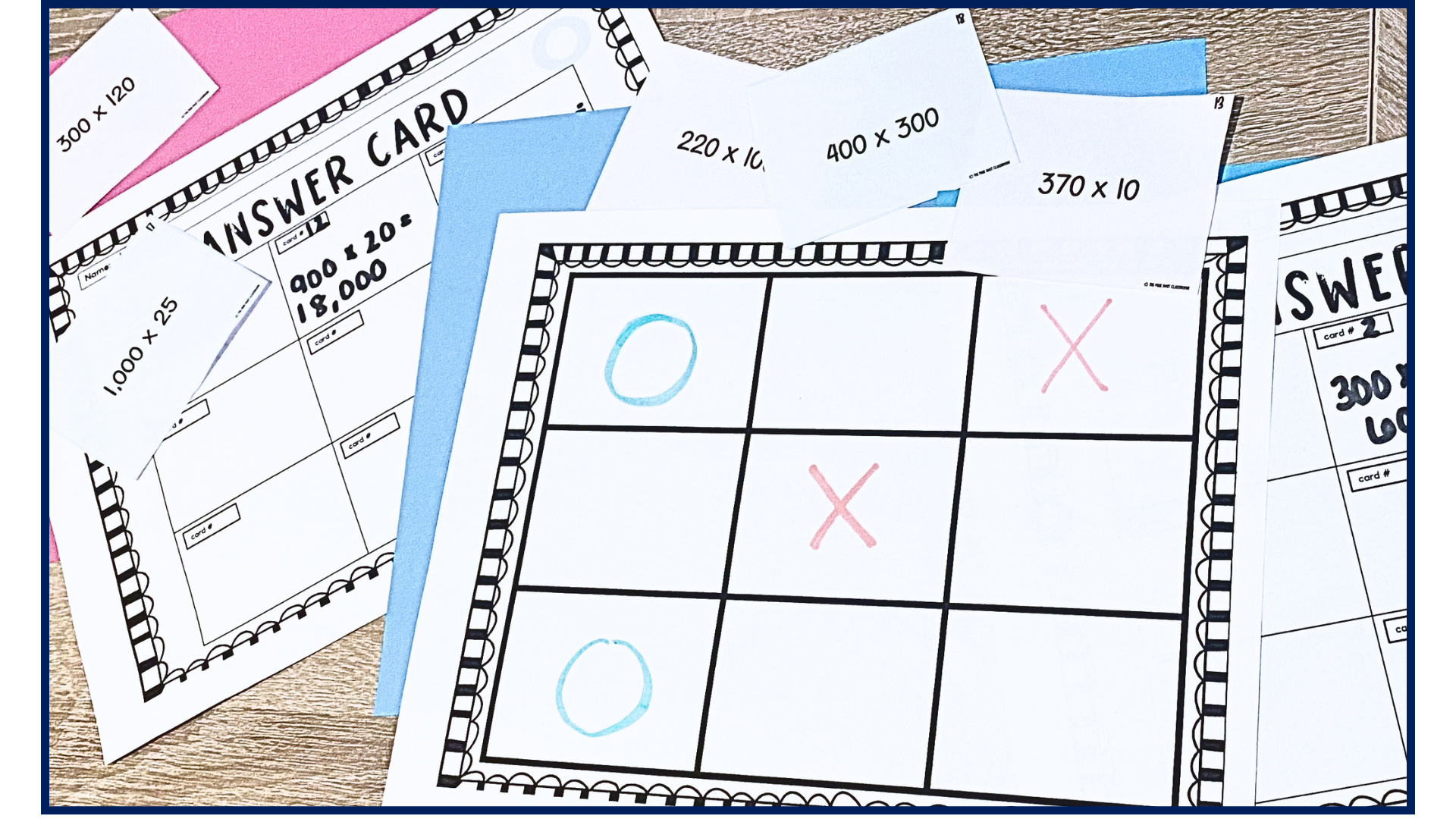
Speaking of a good classic childhood favorite, tic-tac-toe is just one of those games that never gets old. Try incorporating math into this easy to play game for an added benefit in your classroom. I use these ready made Tic-Tac-Math game boards so that I already have the equations and answer keys ready to go!
3. Task Card Scoot
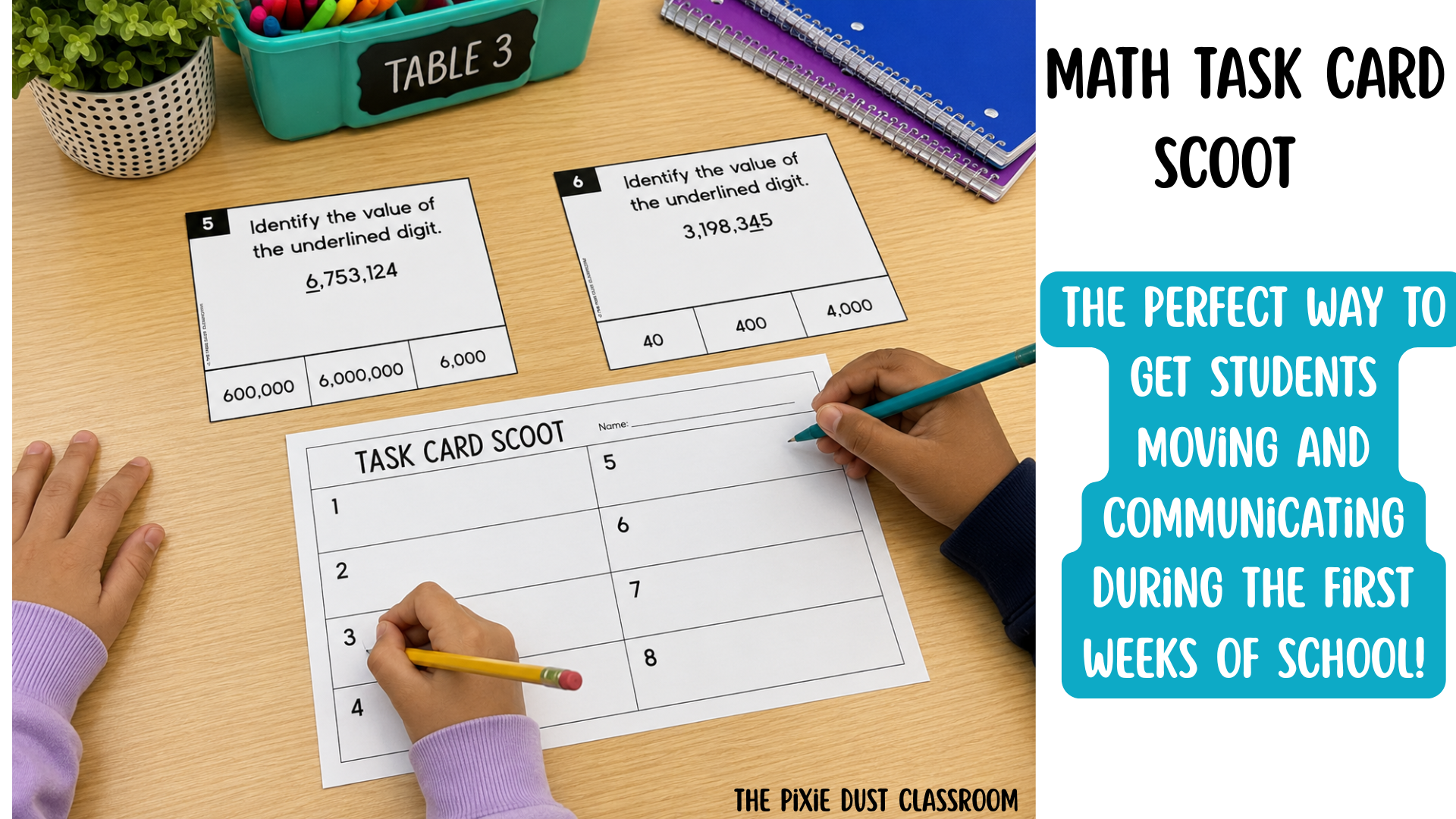
After a summer full of freedom and fun, getting students to sit still for hours is a real challenge. This game allows them to move around the classroom while solving problems that give you insight into their understanding. You can have them review any math concept with this game, but for the first week I often use a place value task card set like this one!
4. Color by Code Math
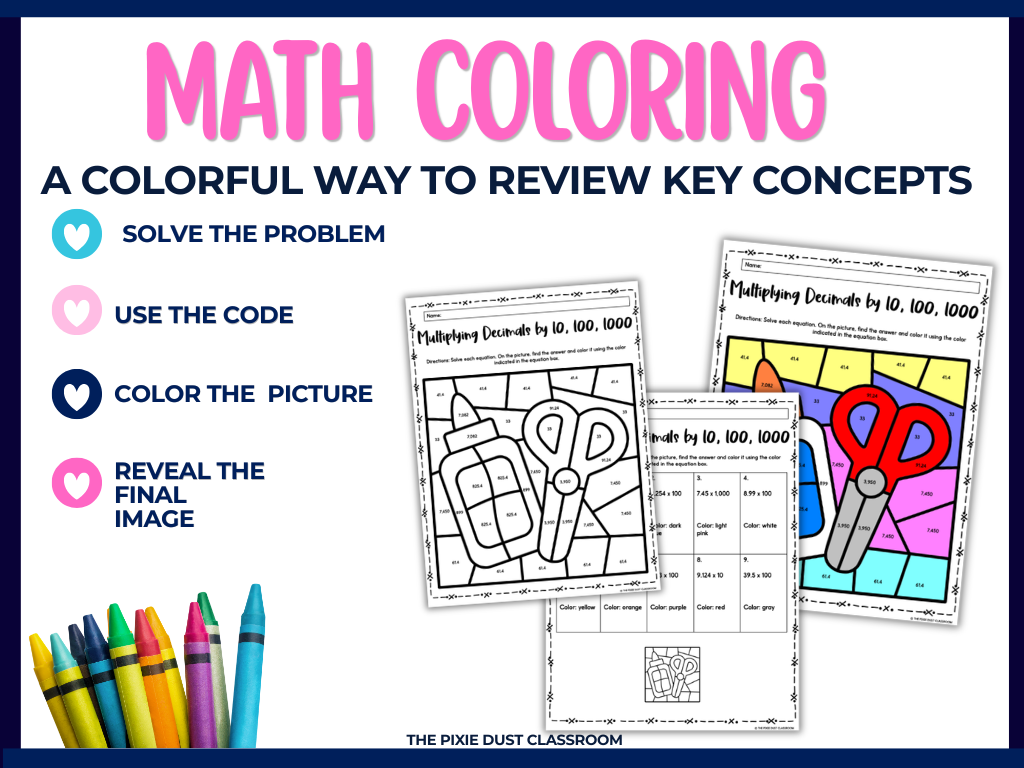
If you are anything like me - that Target crayon, marker, colored pencil sale at back to school time is where I thrive. I stock up on all the good stuff and then create a classroom full of color. I LOVE using math coloring sheets throughout the year, but during the first few weeks they serve a few purposes. First, I can choose a different math skill for each day or focus on prior grade math review for one domain. The best part during the first few weeks though is that coloring is such a great, relaxing activity that it allows students to have some down time during the day. They can color alone, in partners, or with a small group. If I am looking to build community and friendships, I will often buddy students up so they can chat and color. Here we can also practice appropriate classroom noise levels, showing work expectations, and more!
5. Math Board Games
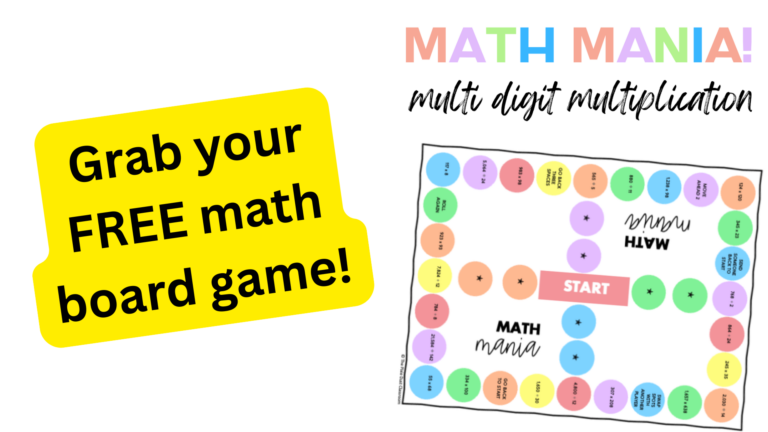
There are so many great board games out there that can be transformed into a math edition. From Monopoly, to Clue, to Trouble - with just a little creativity can be turned into a math game. One of my favorite games growing up was Trouble - loved the little popping dice, the colors, and the challenge. Adult/teacher me decided this had to become my inspiration for a math game. I created Math Mania with that game in mind and my students love it! It is a great way to bring a small group of students together during the first few weeks.
Want to try this one for FREE? Grab it here!
6. Math Four Corners
Four corners is a classic and easy to implement game. I love doing this on as a morning meeting activity during the first few weeks (and beyond). It is a great way to build connections. To make it math related I might post four numbers (one in each corner). I'd start off by calling out just for fun questions like, "Find the number of pets you wish you had" or "This is how many years I have been teaching." Then, we can get into other concepts. For example, "When rounded to the nearest ten, this number rounds to 40."
7. Team STEM challenges
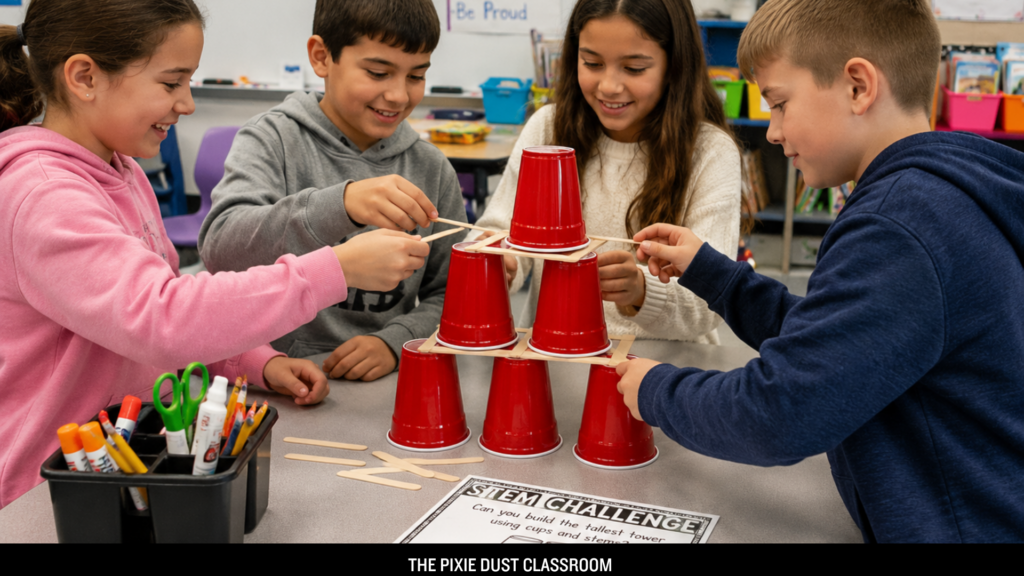
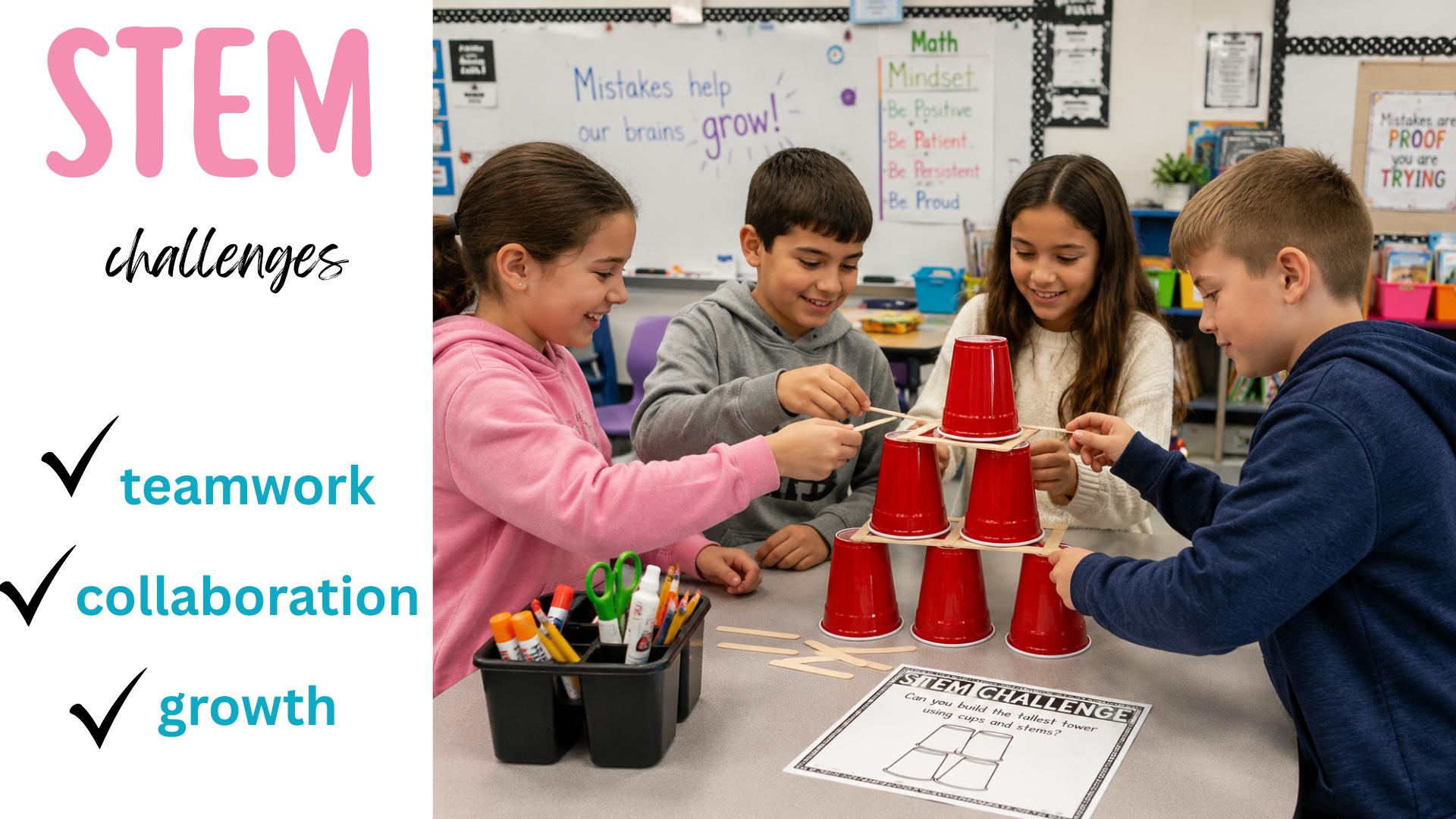
My students always love a STEM challenge task. From stacking cups, to floating boats, and flying paper airplanes - there has never been a lesson that students didn't like! These can get even the shyest students moving, talking, and smiling!
8. Math Escape Rooms
My own kiddos love going to escape rooms and this is such a fun way to bring that magic into the classroom. Students work together to escape a situation (like...they are stuck at school and the summer is here bell is just about to ring!) They have to use their math skills and teamwork to ensure that the puzzle is solved in time.
9. Shopping!
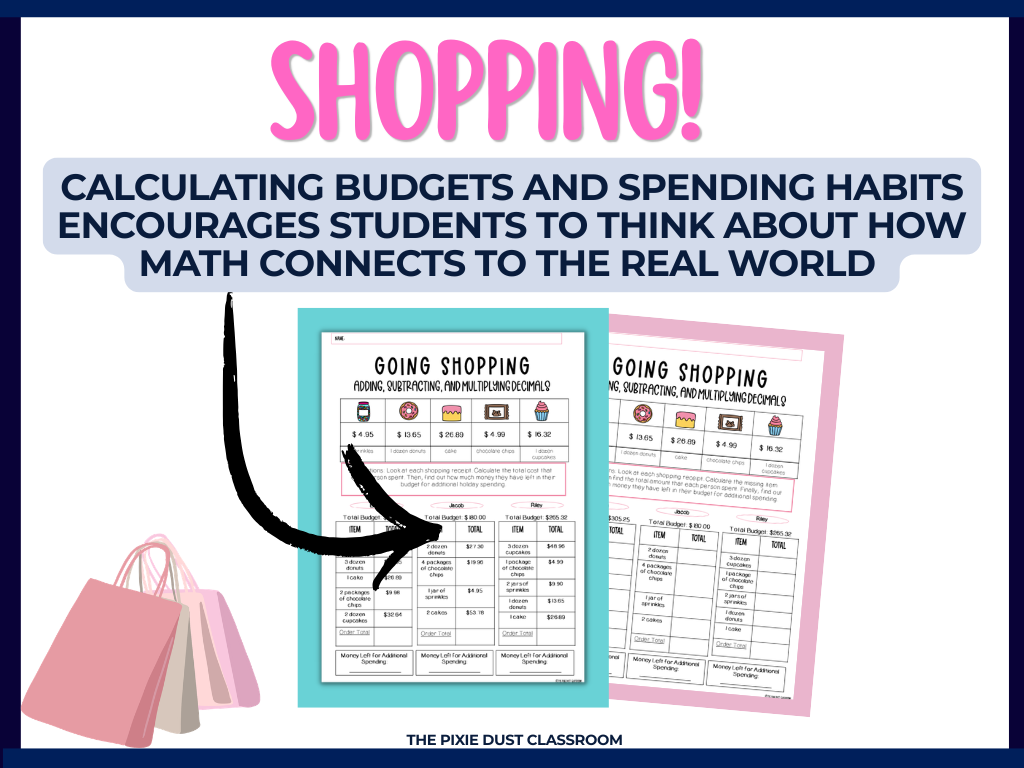
Yes, you read that right! Shopping! Shopping is so much fun, and I love nothing more than making math connect to the real world. This is the best of both worlds. Students get to shop within a budget (you can use your local store sales flyers). I wanted to make something that I could incorporate whenever I wanted, but in more of a controlled way - so I love using these when I am reviewing decimal skills!
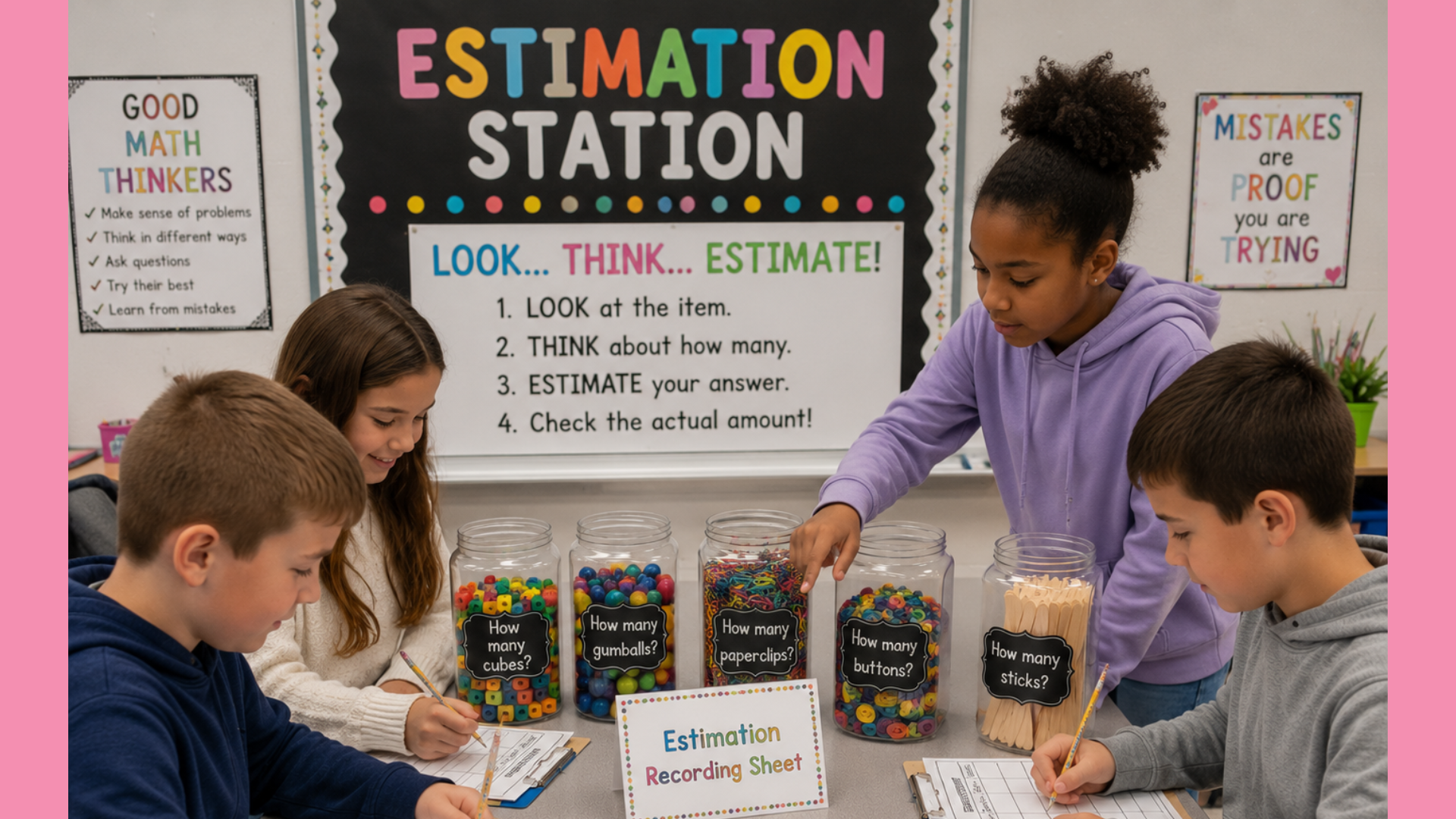
10. Estimation Stations
I love a good estimation jar! We do them every month at the library, and I love bringing this type of activity into the math classroom, too. I usually change them out monthly and might connect to a holiday or time or year to keep things interesting. I also change up the size of the items each month. One month might feature small toy Dinos, while another month might display larger cubes. This really builds curiosity, helps students activate prior knowledge, builds their reasoning skills, and encourages them to explain their thinking.
Need something that you can use right now? Check out this math board game FREEBIE!