I remember my first year teaching vividly. I was so excited to decorate, organize, and create the most welcoming classroom possible.
And I did.
It looked adorable.
I carefully planned every detail. I had clear classroom rules, high expectations, and a positive classroom environment. I thought I had everything figured out.
Then the students arrived.
Every morning felt like controlled chaos. Students lingered at their cubbies, conversations grew louder by the minute, backpacks seemed to take forever to unpack, and I found myself constantly redirecting students just to get the day started.
And if I’m being honest…I dreaded the thought of my principal walking in for an unannounced observation during those first fifteen minutes. Surely this wasn’t what a well-managed classroom was supposed to look like.
The funny thing was, my students weren’t the problem.
They were kind, respectful kids who wanted to do well.
So why did every morning feel so stressful?
Then it hit me.
I didn’t actually have a morning routine.
Sure, students knew they needed to turn in homework, we took attendance, read the morning message, and eventually gathered for our morning meeting. But there was a surprising amount of unstructured time in between. Without realizing it, I had left the most important part of the day up to chance.
Once I recognized that all of that “in-between time” was working against me, everything changed.
I created a simple morning work routine.
Instead of wandering in and wondering what to do next, students immediately had a purposeful task waiting for them every morning. They knew exactly where to go, what to do, and what would happen when they finished.
That one small change transformed our mornings from hectic and unpredictable into calm, focused, and productive.
What if those first ten minutes of every school day could strengthen math skills, build confidence, reduce classroom management issues, and give you valuable assessment data—all before your first lesson even begins?
That’s exactly what intentional morning work can do.

Want time-saving teaching ideas, engaging math resources, and classroom inspiration delivered straight to your inbox?
Join the Pixie Dust Community!
Morning Work Sets The Tone For The Entire Day
Morning work is one of those classroom routines that can easily be overlooked. I see questions like these all the time:
- “Do I really need another thing to correct?”
- “Does it even make a difference?”
- “I don’t have enough time in the morning to fit it in.”
And honestly?
I completely understand because I used to think the exact same thing.
Until I gave it a try.
Implementing a consistent morning work routine completely changed the way my classroom functioned. Instead of starting the day in a whirlwind of backpacks, conversations, and constant reminders, students walked in knowing exactly what to do. They settled in quickly, got right to work, and the room transformed into a calm, focused learning environment.
That intentional start didn’t just improve our mornings—it set the tone for the entire day.
Yes, my students were reviewing and reinforcing important math skills every morning, but the academic practice was only part of the benefit. The predictable routine built independence, reduced off-task behavior, and helped our classroom run more smoothly from the first bell until dismissal.
Morning Work Provides Daily Spiral Review
We all know how important it is to continuously spiral in review skills throughout the year. Whether that means reviewing the previous grades’ content at the beginning of the year, or going back to review fractions when we are well into geometry. It is not just a learn it and forget it situation. Students need repetition, real-world context, and spiral review. Morning work does just that. Giving students a small task to work on each morning (I’m not talking full worksheets or 20+ problems) is a perfect bite size way to revisit topics.
Many mornings, I will also bring that concept into our morning meeting for a math talk. Students will share their solutions and ideas and that collaboration benefits everyone.
It Builds Student Confidence
Now, hear me out.
I know some mornings are going to be more challenging than others.
If the review skill for the day is multiplying decimals and a few students can’t quite remember how to do it, that can feel frustrating. But here’s the thing—that’s okay.
One of my favorite supports is keeping a binder full of math anchor charts that students can reference whenever they need them. Even if we haven’t officially reached that topic in our curriculum, students can flip to the appropriate page, refresh their memory, and give the problem another try. It encourages independence while reinforcing that it’s perfectly okay to use tools and strategies when learning.
I also firmly believe that productive struggle is one of the most valuable parts of learning math. When I know a more challenging concept is coming up in our morning work, I often make it part of our morning meeting discussion or use it as the warm-up for that day’s math lesson. Students can compare strategies, ask questions, and work together to overcome obstacles.
That’s the beauty of morning work.
It creates a low-pressure space where students can make mistakes, learn from them, and keep growing. If they don’t master a skill today, they’ll see it again. That’s the power of spiral review—it gives students repeated opportunities to strengthen their understanding without the stress of a graded test.
And here’s an added bonus…
Morning work is essentially built-in test prep all year long.
Instead of cramming review into the weeks before state testing, your students have been revisiting important skills every single day. By the time testing season arrives, those concepts feel familiar because they’ve been practicing them consistently all year.
Take that, state testing!
What Makes Great Morning Work?
Once you’ve decided to implement morning work, the next step is choosing activities that truly support your students—and make your life easier.
Here are three things I always look for when choosing morning work.
1. Choose Meaningful Review
Morning work should reinforce skills that students have already been introduced to, not teach brand-new concepts. Reviewing previously taught material builds confidence, encourages independence, and helps students retain skills long-term through consistent spiral review.
2. Keep It Short and Purposeful
Aim for activities that take about 10–15 minutes to complete. This gives students enough time to thoughtfully work through the problems, check their answers, and transition smoothly into the rest of the school day without feeling rushed.
3. Make It Easy to Check
Let’s be honest—you don’t need another assignment that takes forever to grade.
Look for morning work that is quick to review. Color-by-code activities are one of my favorites because you can check just a few answers and quickly compare the finished picture to the answer key.
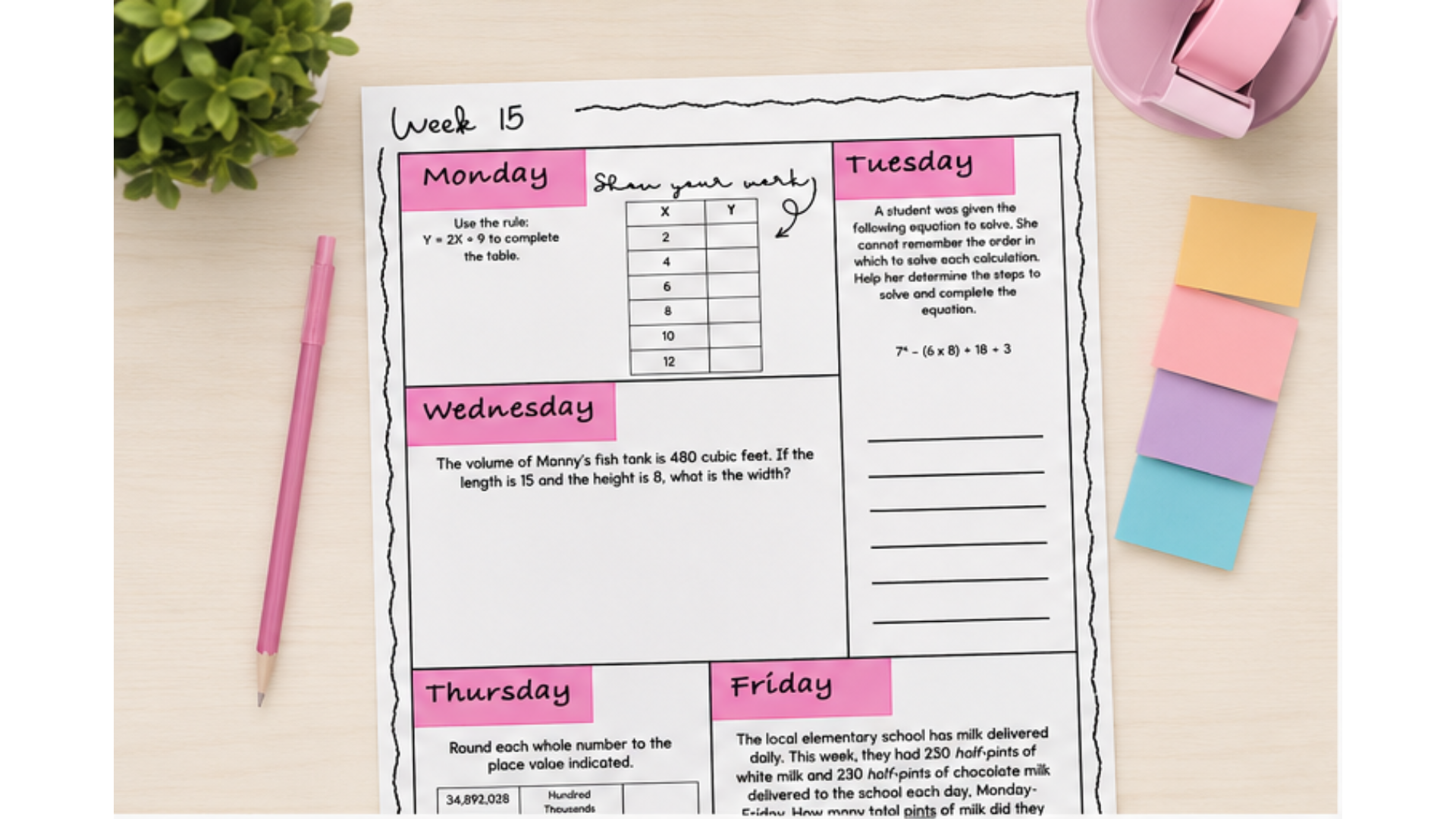
Another great option is a weekly morning work page with just a handful of carefully selected problems each day.
Collect the week’s work on Friday, do a quick scan, and you’ll have a clear picture of which skills need a little extra attention.
The best morning work doesn’t create more work for the teacher. It creates more independence for students while giving you valuable insight into what they know and what they still need to practice.