- THE PIXIE DUST CLASSROOM
Mastering Multi-Step Fraction Word Problems
Fractions can be a tricky concept for many students, and adding word problems to the mix often increases their anxiety. However, fractions are not only a vital part of everyday life but also an essential component of fourth and fifth-grade math standards. These skills are important to master! While multi-step fraction word problems can be challenging, they also offer a unique opportunity to spark curiosity, develop reasoning, and build persistence—key skills every student needs. When approached the right way, fractions can transform from frustrating to fascinating. In a sense, fractions are little heroes in the math classroom!
Top Tips for Teaching Multi-Step Fraction Word Problems
Start With Simple Scenarios
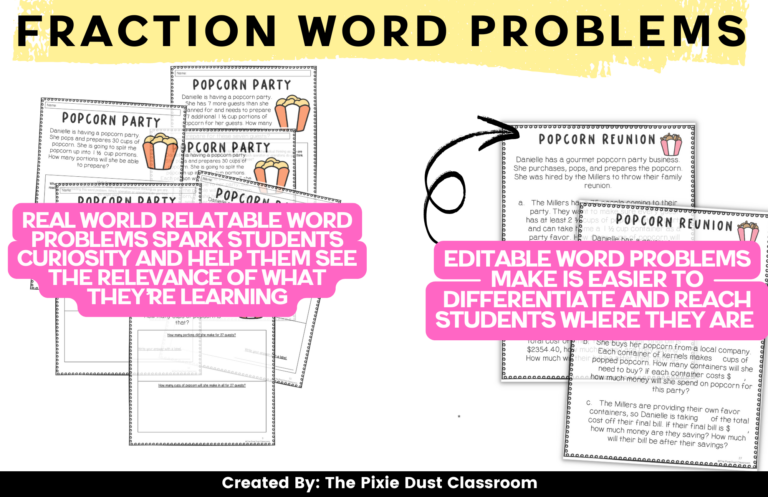
Using simple, relatable real-world examples in word problems is essential when teaching fractions. For many students, fractions can feel like an abstract concept with no connection to their daily lives. By demonstrating how fractions are used in everyday activities—like sharing a pizza, baking, or dividing a budget—you can spark their curiosity and help them see the relevance of what they’re learning. This approach not only engages students but also strengthens their understanding by linking the math concept to familiar experiences, which improves retention. Once students feel confident with relatable problems, gradually increasing the complexity of scenarios or equations allows them to progress with less frustration and more success.
Break Down the Problem Solving Process
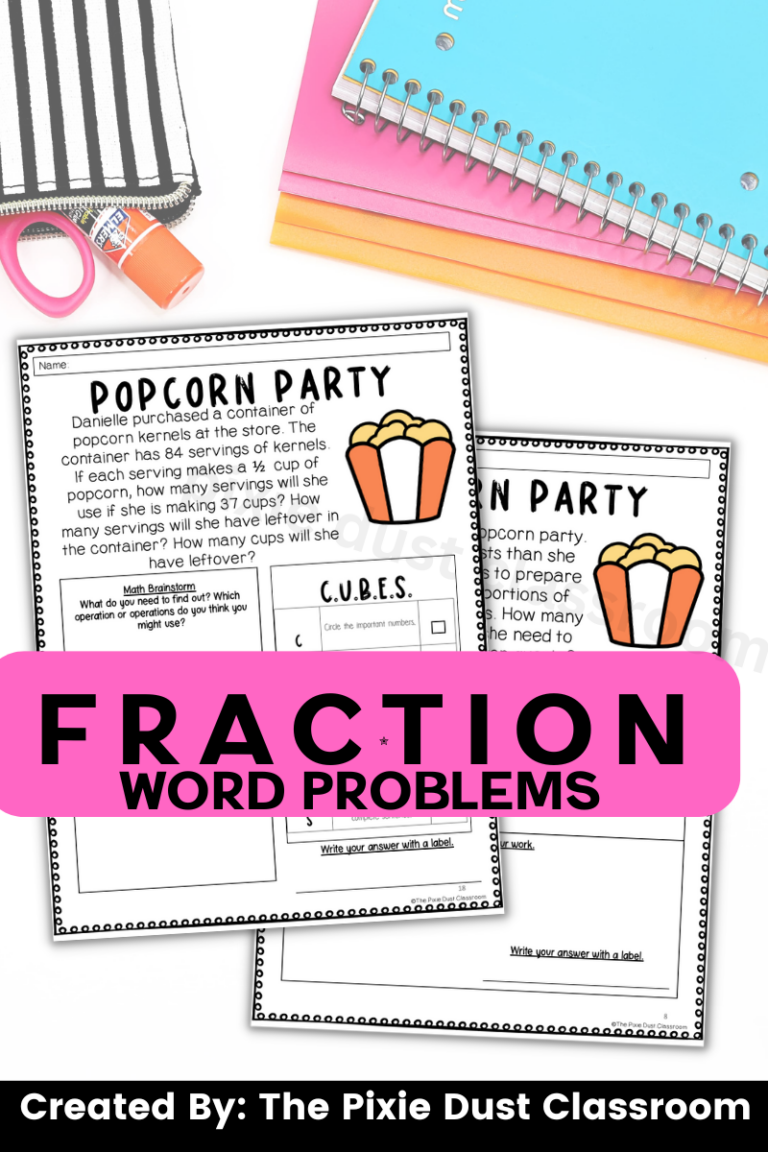
Breaking down the problem-solving process provides students with a clear roadmap for tackling multi-step word problems. Strategies like C.U.B.E.S. (Circle important numbers, Underline the question, Box key words, Eliminate unnecessary information, and Solve/state your answer) serve as helpful guides to keep students focused on what matters most. Over time, much like using a guidebook, students will naturally internalize these steps and solve problems with confidence. Encourage students to pair these strategies with reasoning tools such as models, diagrams, drawings, or equations to represent the problem visually. This combination of structure and creativity helps build a deeper understanding of fraction word problems.
Practice! Practice! Practice!
We’ve all heard the phrase, “Practice makes perfect,” and when it comes to mastering fraction word problems, it couldn’t be more accurate. Providing students with plenty of opportunities to practice real-world, multi-step fraction word problems helps them build confidence, solidify their understanding, and make meaningful connections. Meeting students where they are and gradually increasing the challenge is key to their success. Choose word problems that are easily differentiated—such as those with built-in strategy supports or editable components—so all learners can thrive. Ready to get started? Check out these fraction word problems to engage your students today!
Teaching multi-step fraction word problems doesn’t have to be overwhelming—for you or your students. By using real-world examples, breaking down the problem-solving process, and providing ample opportunities for practice, you can transform fractions from a challenging concept into an exciting and accessible part of your math curriculum. With the right strategies and tools, students will not only master these skills but also develop the confidence and persistence they need to tackle any problem
Happy Teaching!
xo, Kristin @ The Pixie Dust Classroom
Related Posts

The Best 5th Grade Morning Work for a Stress-Free School Year
If you’ve ever found yourself scrambling to find something meaningful for students to do while you take attendance, answer emails, or help a student, you’re
Why Every 5th Grade Math Classroom Needs a Strong Morning Work Routine
I remember my first year teaching vividly. I was so excited to decorate, organize, and create the most welcoming classroom possible. And I did. It
How to Make the First Week of Math Fun in Upper Elementary (10 Easy Activities)
The first week back after summer break can be tricky! You want to get to know your students, build a positive classroom community, and help
The Best First Week of School Activities for Building Classroom Community
The first few weeks back to school are filled with excitement, anticipation, a few nerves, and plenty of chaos—for both teachers and students! While it’s

Setting Goals: New Years Classroom Bulletin Board Activity Students Love
Coming back from winter break is hard. Students are out of routine. Energy levels are all over the place. And while you know goal setting

Incorporating Mindfulness in the Classroom
Mindfulness in the classroom can be beneficial to both teachers and students. My daughter was extremely fortunate last year. Her fourth grade teacher was all